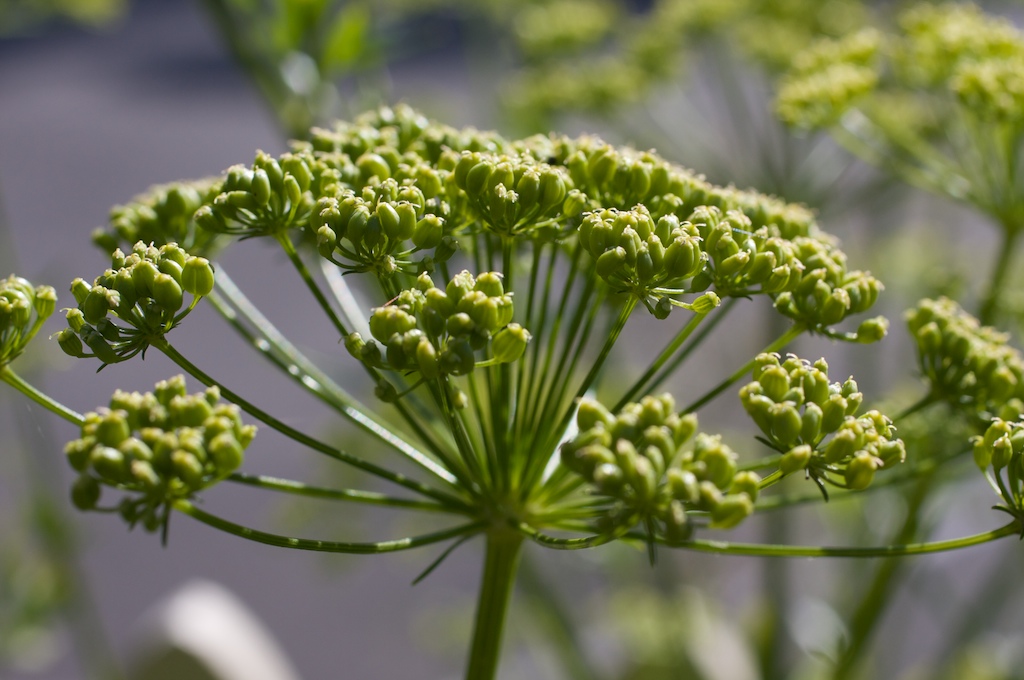
The garden used to be overrun with aphids, sometimes to the extent that it was hard to find some plants under the seething mass of bugs (eww!). One thing I learnt at my permaculture course was that umbrelliferous plants (plants with umbrella-shaped collections of tiny flowers) attract beneficial wasps into the garden. The wasps then…

The benefits of umbrelliferous plants

Parsley plants gone to seed

The garden used to be overrun with aphids, sometimes to the extent that it was hard to find some plants under the seething mass of bugs (eww!).

One thing I learnt at my permaculture course was that umbrelliferous plants (plants with umbrella-shaped collections of tiny flowers) attract beneficial wasps into the garden. The wasps then inject their eggs into aphids, which hatch and eat the aphids from the inside out.

This all sounded good in theory, but I was doubtful. Nonetheless, I tried a different tack this year, and let many more plants to go seed. This included parsley, dill and fennel (all umbrelliferous plants). Much to my surprise, it worked! Narry an aphid to be seen anywhere since.

(We’ve also had good success with companion planting, such as garlic chives next to our climbing rose.)

Good scores for natural pest control…

2 responses to “The benefits of umbrelliferous plants”

  1. Oliver Bock Avatar
    Oliver Bock

    The “success” of your umbrelliferous may just be coincidence. My parsley has gone to seed and yet I see a record number of aphids on my lemon tree. Let me suggest a more practical alternative that is proved to work: go and buy a bottle of garden bug spray and spray the tree + aphids. Go back a few hours later and observe dead aphids on ground.

  2. Miriam Avatar

    Thanks for that! I’ve let my parsley go to seed because I think the flowers are so beautifully arranged – you’ve given me an extra excuse.

Leave a comment