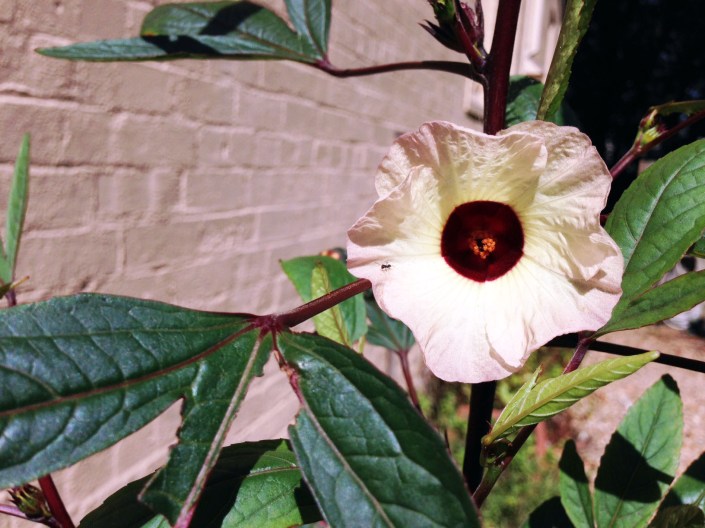
When I was at the Council nursery a while back, they asked me “you know about plants, right?”. When “um, sure” was the answer, a rosella plant was pressed into my hands. Ok, now what do I do?
I had, of course, heard of rosella, and rosella jam in particular. A bit of reading uncovered that rosella is a fast-growing summer plant, reaching 1-2m in height.

True to expectations, it proved to be very vigorous, and I harvested the fruit this weekend. It’s actually the red calyx — which surrounds the green internal seedpod — that’s used in cooking.
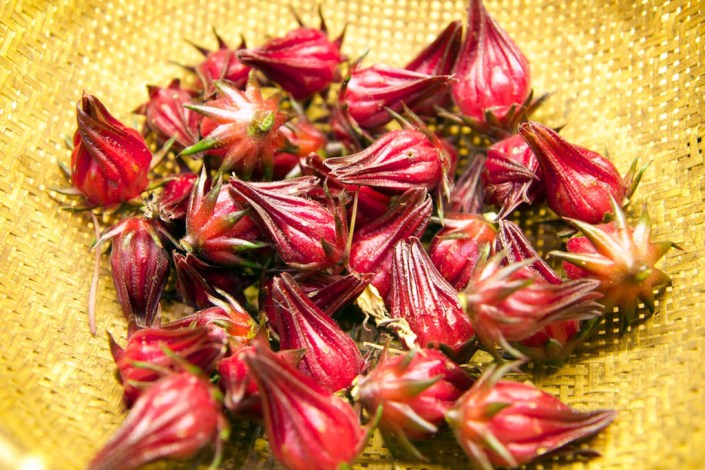
I was able to get a modest harvest of about half a basket (perhaps 50 calyx). Following some excellent instructions on how to make rosella jam, I spent the evening simmering and sieving, while watching TV.
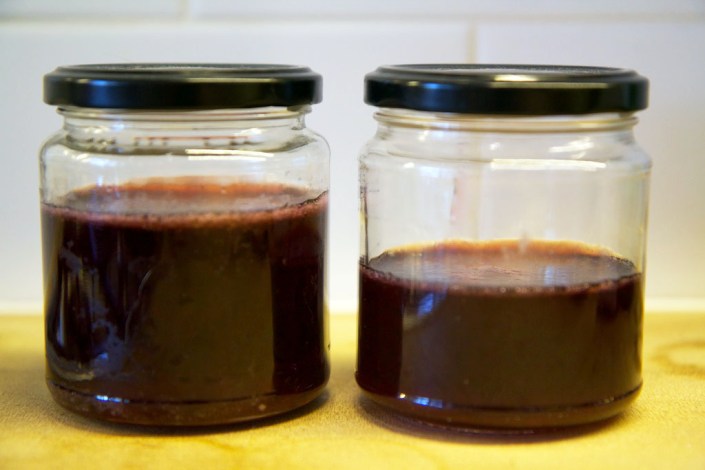
The results were a little over a jar of rosella jam, which was transformed from the bright red calyx into a deep red colour.
And the taste? Think strawberry-meets-rose, distinctly different from any other jam I’ve tasted. Delicious!
 Fire Mountain Permaculture
Leave a comment