As a result of a mention in New Scientist, I stumbled across the Open Source Beehive project, which aims to do two things: create simple plans for bee hives that can be used by all, and to design sensors that can monitor the hives.
The core of the project are plans for both Warré and Kenyan (Colorado) top-bar hives that can be cut out a single sheet of plywood. The hives are designed to be produced using a CNC (computer-controlled) cutting machine.
I loved this idea, as it brought together two of my passions: beekeeping and technology.
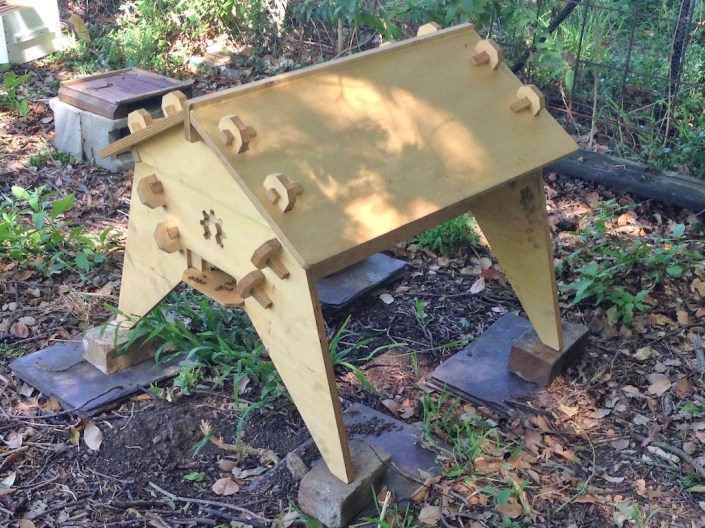
A CNC-cut Kenyan hive
Kenyan (Colorado) hives are different from traditional hives in that they run horizontally, rather than vertically. Shaped like a horse trough, the bees draw comb on simple top-bars that run across the hive.
I downloaded the plans, and sourced a local company who could cut the pieces, the very friendly Big City Productions in Alexandria.

It’s an amazing thing to see the the fully automated machine work across the sheet of ply, cutting out even the most intricate of pieces. An hour later, the hive was completed. The total cost, including the cost of a sheet of eco-friendly hoop pine ply and the use of the CNC machine, was about $400.
The result is a pile of pieces that beautifully slot together without screws or nails. All that was left to do was to protect the hive with a few coats of linseed oil.
Now for the bees
Only a few weeks later I received a call about a swarm of bees in Ashfield. Hanging from a tree directly beside the footpath, this was a big swarm. It was also rather protective, as attested by the multiple stings I receiving while catching the swarm in a box.
While waiting for the bees to all follow the queen into the box, a mother and her kids walked by. After congratulating me for “looking after the bees, as they’re dying out”, she casually mentioned “and you know about the wild hive?”. Um, no?
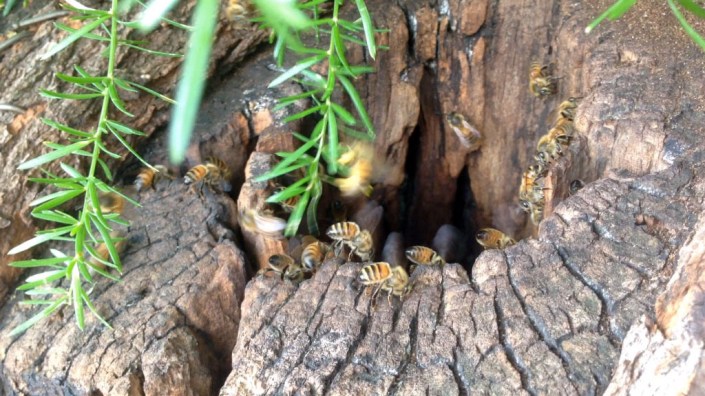
Just a dozen metres away, on a major road, she showed me a lovely wild hive in the rotted-out trunk of a camphor laurel tree. I think I caught the prime (first) swarm from this wild hive.

I took the swarm home, and shook it out onto a white sheet, leading up to the entrance of my new Kenyan top-bar hive. What happened next is one of the true wonders of nature: the bees started climbing the sheet, and once they found the entrance to the hive, they started streaming in.
Tens of thousands of bees, all piling into the hive, within the space of 20mins. Amazing!
A vigorous but aggressive hive
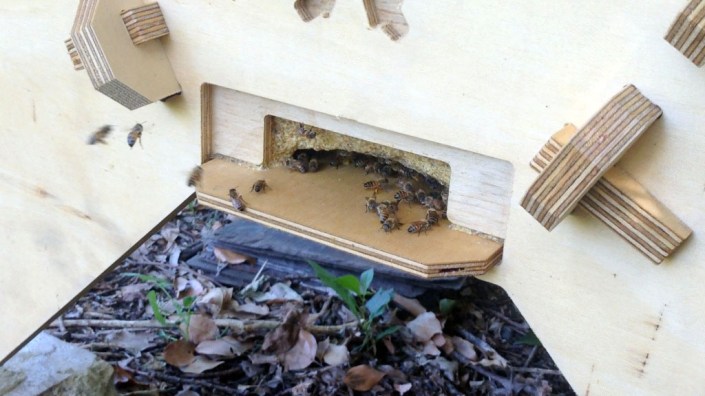
From the outset, the hive proved to be incredibly vigorous. Within a few days it was foraging as strongly as my 18-month-old main hive. When we opened it up a fortnight after it was established, half of the entire hive was brood. Within just a few more weeks, it was completely full of drawn comb.
That’s the good news. The bad news was that the hive was very aggressive, attacking me the moment I opened up the hive. It also had a nasty tendency to sting people when they were just walking near the hive.
(That would seem to reinforce the idea that by breeding docile bees, we’ve potentially also weakened them in terms of their vigor and disease resistance.)
While the hive was placed in the land of the former convent, well away from people, it came to the attention of the church. Who — not unreasonably — asked them to be moved to a new home.
By amazing coincidence, a cousin had just completed a beekeeping course, specialising in top-bar hives. (What’s the chances of that!) Living on the far South coast, he was looking for bees to get him started.
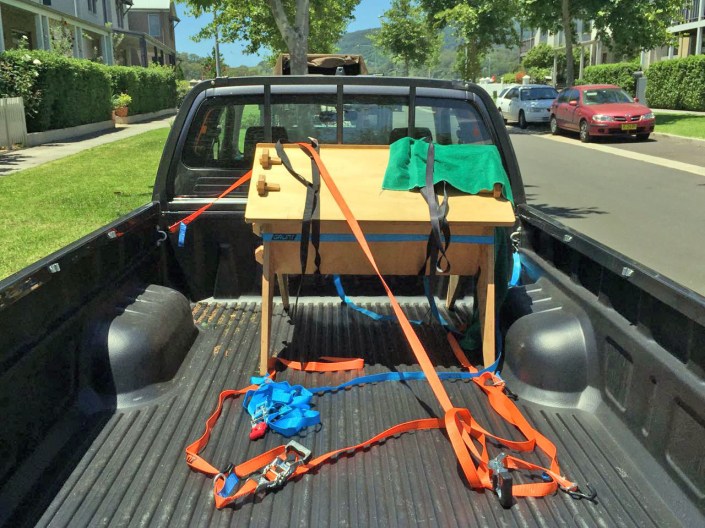
So at Christmas I took the hive down South, in my new ute. Where it was handed over to my cousin, for the rest of the trip to its new home in the trees.
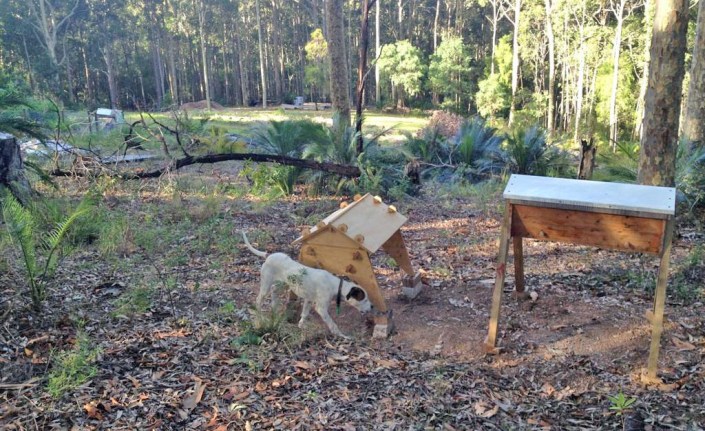
I’m pleased to see the hive end up in the hands of someone passionate about natural beekeeping, in such a lovely bushland setting.
Lessons learned
The idea of creating a hive from a sheet of plywood is a great one, and the open-source plans worked well. Since the creation of my hive, the Open Source Beehives project has continued to evolve the plans, resolving a few issues with the original design.
Would I recommend others to use these plans? Absolutely, yes.
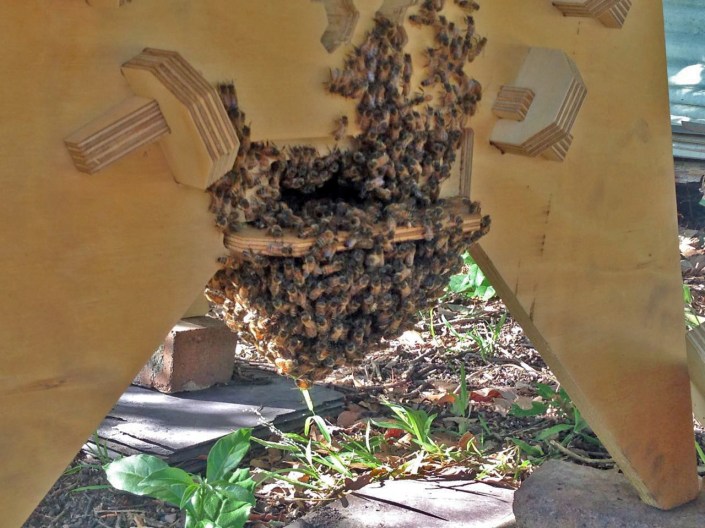
The only proviso is this: in Australian conditions, the Kenyan hive is probably too small. It has the interior volume equivalent to 2-3 Warré boxes, which isn’t a lot.
Within 6 weeks of my hive being established, it had already re-swarmed. This was no doubt due to the large size of the swarm, and its strength. I suspect it won’t be the last time it swarms this season.
I’ve suggested to the open-source folks that they consider creating a larger version of the Kenyan plan, perhaps cut out of a couple of sheets of ply. We’ll see if they take up the idea.
Watch the video
While I haven’t ended up with a top-bar hive, it’s been an incredibly interesting journey, from cutting and assembling the hive, to catching the swarm.
I’ve documented this in the video at the top of the post. Enjoy!
Onwards to the next project…

 Fire Mountain Permaculture
Leave a comment